How to compare your Google reviews with local rivals
A practical way for tradies to see how their Google reviews and profile compare with other local businesses, without invented targets or ranking promises.
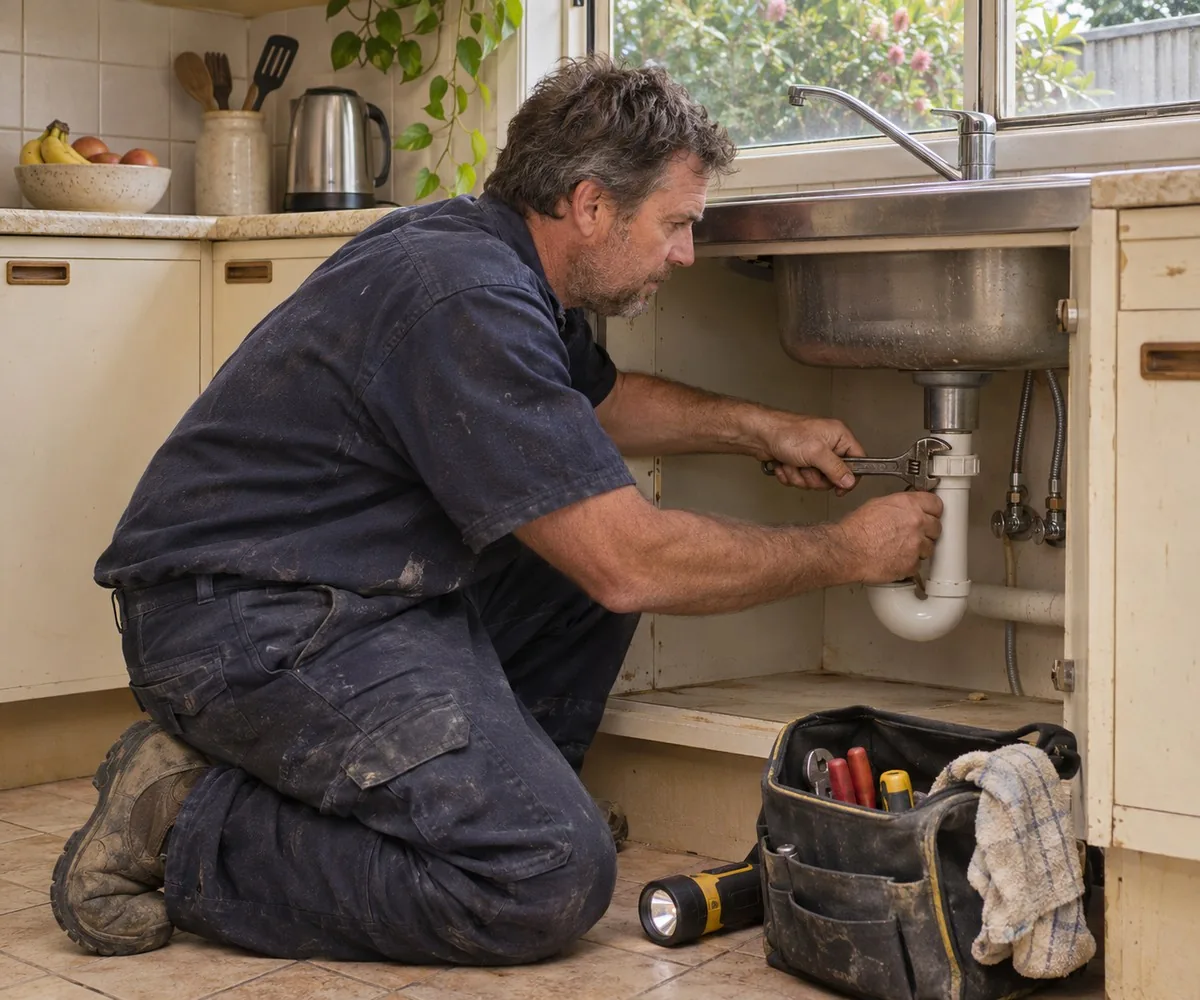
It is useful to know how you look next to the other plumbers in Cleveland, or the other builders showing up around Springfield. It is not useful to turn that into a daily scoreboard, or to invent a number you have to beat.
Google does not publish a review target, and it does not let you pay for a better local position. What you can do is look at the same results a customer sees, write down a few facts, and decide whether reviews, replies or the profile itself need work.
Search the way a customer searches
Use your phone, ideally in or near the suburb you care about, and type what a customer would type. "Electrician near me" in Robina will not show the same mix as "electrician" typed from Caboolture.
Do this for a few real work areas, not once for the whole of Australia. A Sydney search and a Melbourne search are different jobs.
Stay signed out, or use a private window, so your own account is less likely to colour what you see. This is still not a perfect lab test. It is close enough to be useful.
Look at the local results, then open a handful of profiles, including your own.
What to notice, without overcooking it
For each business, write down a few visible facts:
- The trade and name, so you know who you looked at.
- The average rating, and how many reviews it is based on.
- How recent the latest reviews are, and whether they mention real jobs.
- Whether the business replies, and how those replies read.
- Whether the profile looks complete: categories, photos, hours, website, and a clear sense of where they work.
That is enough. You do not need a spreadsheet with ten columns, and you do not need to do it every week.
Google says more reviews and positive ratings can help your business's local ranking, as part of prominence, and that local results are mainly based on relevance, distance and prominence. Distance still explains a lot of what you see. A crew that is simply closer may appear for a search even if their review count is not the highest.
So if a business outranks you, do not assume reviews are the only reason. Check whether their profile is clearer, whether they are closer to the search, or whether you are comparing different service areas.
How to read the gap
If local rivals have many recent, specific reviews and you have a thin or old list, the practical move is to ask every customer for an honest review, using the official link or QR code. There is no official finish line. There is a habit.
If your review count is already in a similar range, look harder at the other columns. Unanswered reviews, thin photos, or a messy service area are often the easier fixes.
If their average rating is higher, read the actual comments before you panic. Your review score is the average of all published ratings, and it can take up to 2 weeks to reflect a new review. One new rating will not always move the number straight away.
Pay attention to replies. Google says helpful replies can help you stand out. As a customer, you can already see the difference between a profile that answers and one that goes quiet. That is true whether or not replies change the ranking.
What not to do with this information
Do not leave reviews on a competitor's profile, and do not ask anyone else to. Google forbids posting on a competitor's place to undermine that business, and it treats conflict-of-interest reviews as a policy problem. The ACCC also says it is illegal to create or arrange fake or misleading reviews.
Do not copy another business's reviews, photos or wording. Do not try to manufacture a spike so the count looks closer to theirs. The ACCC lists a short, sharp pile of similar reviews as a possible sign of fakery.
Do not treat one search on one afternoon as the truth forever. Repeat the look every month or two, in the same suburbs, and compare your notes to your previous notes, not to a number you saw in an ad.
A simple way to use the findings
Turn the comparison into one or two actions, then stop.
Examples:
- The official review link is missing from invoices, so start using it this week.
- 5 star reviews are not getting replies, so build a same-day habit, or get help with those replies.
- Photos are older than the rivals' photos, so add recent job photos, with permission where you need it.
- Your service area is broader than where you actually work, so tighten it.
Then go back to the tools. The comparison is meant to steer a small change, not to sit in your head on every job.
ReplyMate includes local rivals tracking, a monthly report and a profile health check, so you can see this picture without doing a manual audit every time. It also replies to 4 and 5 star Google reviews and flags 1 to 3 star reviews to you the same day. Replies to 4 and 5 star reviews go out within 3 business days on Solo, or within 24 hours on Crew. Have a look at replymate.com.au.